Thyristors Online | Semikonduktor Daya Kualitas Luhur

PARAMETER PRODUK
Katerangan
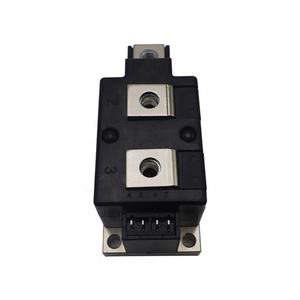
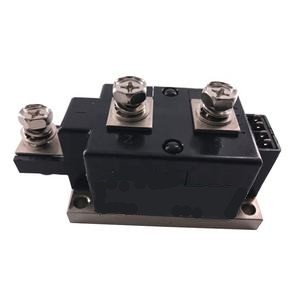
Introduction to Thyristor Diode Modules
Thyristor diode modules, often simply referred to as thyristors, are a type of semiconductor device used primarily for controlling and switching electrical power in various applications. They act as controlled switches, allowing current to flow when triggered by a small gate signal. Once turned on, they remain conducting until the current through them falls below a certain threshold or the direction of the current is reversed.
A thyristor module typically consists of multiple thyristors packaged together to handle higher currents or voltages than a single component could manage. These modules can be found in a variety of configurations, including SCR (Silikon Dikadalikeun Rectifier), TRIAC, and GTO (Gate Turn-Off) thyristors, each designed for specific types of power control tasks.
Features and Advantages of Thyristor Diode Modules
-
High Power Handling Capacity:
Thyristor modules are capable of handling high levels of power, making them suitable for industrial applications that require robust and reliable power management solutions. -
Efficient Power Control:
Thyristors offer precise control over the power delivered to a load. By controlling the timing of the gate pulse, it’s possible to adjust the amount of power being transferred, which is particularly useful in AC power control applications such as dimming lights or speed control of motors. -
Low Conduction Losses:
When fully on, thyristors have low forward voltage drops, resulting in minimal power losses during conduction. This efficiency contributes to lower operating temperatures and improved energy efficiency. -
Konstruksi Rugged:
Designed for harsh environments, thyristor modules feature durable packaging that can withstand mechanical stress, temperature fluctuations, and other environmental factors typical in industrial settings. -
Desain kompak:
Despite their ability to handle significant power, modern thyristor modules are compact, enabling space-saving designs in equipment where size and weight are critical considerations. -
Cost-Effective Solution:
Thyristor modules provide an economical way to implement powerful switching and control functions compared to alternative technologies that might not be as efficient or may cost more per unit of power handled. -
Simple Triggering Mechanism:
Thyristors require only a small gate current to turn on, which simplifies the design of control circuits. The triggering mechanism can be easily integrated into existing systems with minimal additional components. -
Wide Range of Applications:
From motor control and power supplies to welding machines and traction systems, thyristor modules find application across a broad spectrum of industries due to their versatile characteristics. -
Perlindungan arus leuwih:
Many thyristor modules come equipped with built-in protection features against overcurrent conditions, safeguarding both the device itself and connected loads from potential damage. -
Fast Switching Speeds:
Advanced thyristor modules can switch states rapidly, which is beneficial in applications requiring quick response times or frequent switching cycles without compromising performance.
(DPSS sanes modul dioda laser 532nm 545nm 555nm 561nm 571nm)
Specification of DPSS not laser diode module 532nm 545nm 555nm 561nm 571nm
DPSS laser modules supply exact and reliable efficiency for applications requiring details noticeable wavelengths. These modules use diode-pumped solid-state innovation to produce laser light at 532nm, 545nm, 555nm, 561nm, and 571nm. Each wavelength serves different objectives. The 532nm (green) prevails in fluorescence microscopy and laser shows. The 545nm and 555nm (green-yellow) suit biomedical imaging and circulation cytometry. The 561nm (yellow-green) works well in DNA sequencing and Raman spectroscopy. The 571nm (yellow) is optimal for assessment and holography.
All wavelengths supply stable outcome power from 10mW to 500mW. Power stability remains within ± 1% over 8 hours. The light beam quality maintains a TEM00 mode with M TWO
(DPSS sanes modul dioda laser 532nm 545nm 555nm 561nm 571nm)
Applications of DPSS not laser diode module 532nm 545nm 555nm 561nm 571nm
DPSS (Diode-Pumped Solid-State) laser components provide specific wavelengths like 532nm, 545nm, 555nm, 561nm, and 571nm. These are not standard laser diodes. They offer specialized duties across industries. The 532nm green laser is extensively utilized in biomedical imaging. It thrills fluorescent dyes in microscopy. It helps visualize cellular structures clearly. This wavelength is additionally typical in laser light programs. It creates intense green beam of lights target markets see easily.
The 545nm and 555nm wavelengths fall in the green-yellow range. They are ideal for clinical applications. Dermatology uses them for vascular treatments. They target capillary without destructive surrounding cells. These wavelengths work in circulation cytometry also. They assist analyze cell residential properties in research study.
The 561nm laser is essential in fluorescence microscopy. It couple with yellow fluorescent healthy proteins. This boosts image resolution in live-cell research studies. It is additionally used in Raman spectroscopy. It determines molecular frameworks in materials science.
The 571nm yellow laser suits ophthalmology. It treats retinal conditions with high accuracy. It decreases dangers to healthy eye cells. Industrial uses consist of positioning devices. Factories use it for calibration in manufacturing. It guarantees precision in setting up procedures.
Amusement markets count on these DPSS lasers for vivid aesthetic results. They project sharp patterns together or art installations. Scientific labs utilize them for optical trapping. They manipulate tiny bits without contact.
These modules supply security and slim linewidths. They outmatch conventional lasers popular environments. Their small style suits portable devices. Clinical portable devices gain from this feature. They provide consistent efficiency in field applications.
DPSS lasers at these wavelengths adapt to developing technology requirements. They sustain improvements in biotech, production, and study. Their dependability makes them recommended devices for professionals. Individuals avoid frequent recalibration. Upkeep expenses remain low with time.
Profil Perusahaan
PDDN Photoelectron Technology Co., Ltd.(sales@pddn.com) mangrupikeun salah sahiji perusahaan anu unggul dina téknologi éléktronika listrik sareng produk listrik, nu pinuh aub dina ngembangkeun inverters surya, trafo, régulator tegangan, cabinets distribution, thyristors, modul, dioda, pamanas, jeung alat éléktronik lianna atawa semikonduktor. Kami bakal komitmen pikeun nyayogikeun pangguna anu kualitas luhur, produk efisien sarta jasa considerate.
Éta nampi pamayaran ngalangkungan Kartu Kredit, T/T, Uni Kulon, jeung Paypal. PDDN bakal ngintunkeun barang ka konsumén di luar negeri ngaliwatan FedEx, DHL, ku laut, atawa ku hawa. If you want high-quality DPSS not laser diode module 532nm 545nm 555nm 561nm 571nm, mangga ngirim kami inquiries; kami bakal di dieu pikeun mantuan Anjeun.
Métode pamayaran
L/C, T/T, persatuan urang Barat, Paypal, Kartu kiridit jsb.
Pangiriman
Ku laut, ku hawa, ku express, sakumaha pamundut konsumén.
Kaayaan Panyimpenan
1) Nyimpen dina lingkungan garing dina suhu kamar.
2) Hindarkeun beueus sareng suhu luhur.
3) Anggo langsung saatos muka kantong packing jero.
5 FAQs of DPSS not laser diode module 532nm 545nm 555nm 561nm 571nm
What is a DPSS module?
A DPSS module is a type of laser system. It uses a diode-pumped solid-state design. This design differs from standard laser diode modules. It generates light through crystals and other components. The process creates precise wavelengths like 532nm, 545nm, 555nm, 561nm, or 571nm. These modules are compact and efficient. They are ideal for applications needing stable output.
Why are these specific wavelengths offered?
The wavelengths 532nm, 545nm, 555nm, 561nm, and 571nm are chosen for their utility. They match the absorption peaks of common materials. Examples include fluorescent dyes or sensors. These wavelengths are popular in research, medical, and industrial fields. They enable tasks like fluorescence imaging or particle detection. Their availability supports diverse technical needs.
What applications suit these DPSS modules?
These modules work in fields requiring precise green-yellow light. They are used in bioimaging, flow cytometry, or holography. Industrial uses include alignment or quality control. Medical applications might involve dermatology or diagnostics. The wavelengths ensure compatibility with equipment. They deliver reliability in sensitive processes.
Are these lasers safe to use?
DPSS modules emit high-intensity light. Safety depends on proper handling. Most units are Class 3B or higher. Protective eyewear is necessary. Follow guidelines for laser operation. Avoid direct exposure to skin or eyes. Install safety interlocks where required. User training reduces risks.
How long do these modules last?
Typical lifespans exceed 10,000 hours. Durability depends on operating conditions. Maintain stable temperatures. Avoid excessive power surges. Regular cleaning prevents dust buildup. Proper storage extends functionality. Component wear varies with usage intensity. Most users report years of consistent performance.
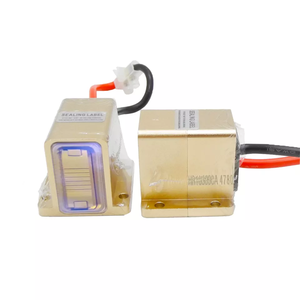
(DPSS sanes modul dioda laser 532nm 545nm 555nm 561nm 571nm)
MÉNTA CATETAN
produk patali
Green LED_SML0603 Transistors Regulators IC rfq integrated circuitel elctronic components DIODE 36VWM 58.1VC DO214AB lcd module
1064nm 50W Uncooled Multimode Laser Diode Module for Laser Equipment Parts
New original smd diode SMF16CA SOD-123FL Support BOM Fast delivery
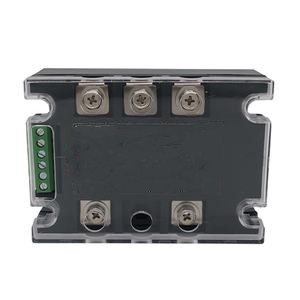
New and original Rectifier diode module RM30DZ-H
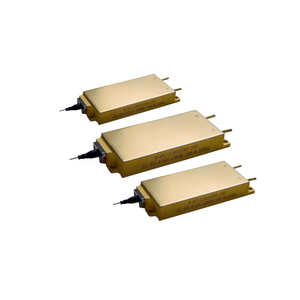
Pin Diode Module 1310nm 1550nm CATV FTTH optical PD Receiver Photodiode without casing Coaxial InGaAs