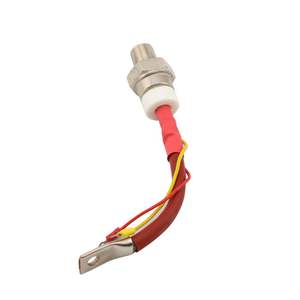
Mtengo Thyristors pa intaneti | High-Quality Power Semiconductors

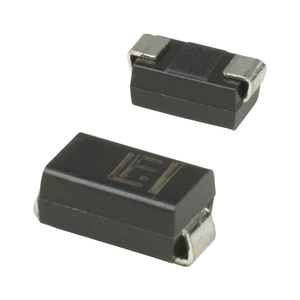
PRODUCT PARAMETERS
Kufotokozera
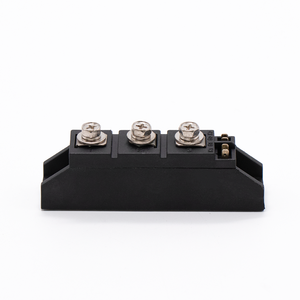
Chiyambi cha Ma module a Thyristor Diode
Ma module a Thyristor diode, Nthawi zambiri amatchedwa thyristors, ndi mtundu wa chipangizo cha semiconductor chomwe chimagwiritsidwa ntchito makamaka pakuwongolera ndikusintha mphamvu zamagetsi pazinthu zosiyanasiyana. Amakhala ngati masiwichi olamulidwa, kulola kuti pakali pano ikuyenda pamene ikuyambitsidwa ndi chizindikiro chaching'ono chachipata. Kamodzi anayatsa, amapitilira mpaka mphamvu yomwe ikudutsamo igwera pansi pa malo enaake kapena njira yapano yasinthidwa..
Module ya thyristor nthawi zambiri imakhala ndi ma thyristors angapo ophatikizidwa pamodzi kuti azitha kuyendetsa mafunde kapena ma voltages apamwamba kuposa momwe gawo limodzi limatha kuyendetsa.. Ma module awa atha kupezeka mumitundu yosiyanasiyana, kuphatikizapo SCR (Silicon Controlled Rectifier), Mtengo wa TRAC, ndi GTO (Kuzimitsa Chipata) thyristors, iliyonse yopangidwira mitundu yeniyeni ya ntchito zowongolera mphamvu.
Mawonekedwe ndi Ubwino wa Thyristor Diode Modules
-
Mphamvu Yapamwamba Yogwirira Ntchito:
Ma module a Thyristor amatha kuthana ndi mphamvu zambiri, kuwapanga kukhala oyenera ntchito zamafakitale zomwe zimafuna mayankho amphamvu komanso odalirika owongolera mphamvu. -
Kuwongolera Mphamvu Moyenera:
Ma Thyristors amapereka chiwongolero cholondola pa mphamvu yoperekedwa ku katundu. Mwa kuwongolera nthawi ya kugunda kwa chipata, ndizotheka kusintha kuchuluka kwa mphamvu zomwe zimasamutsidwa, zomwe ndizofunikira kwambiri pamagetsi amagetsi a AC monga magetsi ocheperako kapena kuwongolera liwiro la ma mota. -
Zowonongeka Zochepa Zochita:
Pamene kwathunthu, thyristors ali otsika kutsogolo voteji madontho, zomwe zimapangitsa kuti magetsi awonongeke pang'ono panthawi ya conduction. Kuchita bwino kumeneku kumathandizira kuchepetsa kutentha kwa ntchito komanso kupititsa patsogolo mphamvu zamagetsi. -
Ntchito Yomangamanga:
Zapangidwira malo ovuta, ma module a thyristor amakhala ndi ma CD olimba omwe amatha kupirira kupsinjika kwamakina, kusinthasintha kwa kutentha, ndi zinthu zina zachilengedwe zomwe zimachitika m'mafakitale. -
Compact Design:
Ngakhale kuti ali ndi mphamvu zogwira ntchito zazikulu, ma module a thyristor amakono ndi ophatikizika, kupangitsa mapangidwe opulumutsa malo pazida zomwe kukula ndi kulemera ndizofunikira kwambiri. -
Yankho Losavuta:
Ma module a Thyristor amapereka njira yotsika mtengo yogwiritsira ntchito kusintha kwamphamvu ndi kuwongolera poyerekeza ndi matekinoloje ena omwe sangakhale oyenerera kapena angawononge ndalama zambiri pagawo lililonse lamagetsi.. -
Njira Yosavuta Yoyambira:
Ma Thyristors amafunikira kachipata kakang'ono kokha kuti muyatse, zomwe zimathandizira kamangidwe ka ma control circuits. Makina oyambitsa amatha kuphatikizidwa mosavuta ndi machitidwe omwe alipo omwe ali ndi zigawo zochepa zowonjezera. -
Ntchito Zosiyanasiyana:
Kuyambira kuwongolera magalimoto ndi magetsi mpaka kumakina owotcherera ndi makina oyendetsa, ma module a thyristor amapeza ntchito m'mafakitale ambiri chifukwa cha mawonekedwe awo osiyanasiyana. -
Chitetezo Chowonjezera:
Ma module ambiri a thyristor amabwera ali ndi zida zodzitchinjiriza zodzitchinjiriza motsutsana ndi zomwe zikuchitika, kuteteza chipangizo chokha komanso katundu wolumikizidwa kuti asawonongeke. -
Kuthamanga Mwachangu:
Ma module apamwamba a thyristor amatha kusintha maiko mwachangu, zomwe zimapindulitsa pamapulogalamu omwe amafunikira nthawi yoyankha mwachangu kapena kusinthana pafupipafupi popanda kusokoneza magwiridwe antchito.
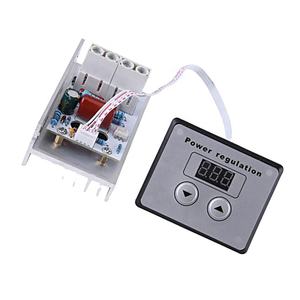
(OPT101 Light Analog Light Intensity Sensor Module Single Chip Photoelectric Diode 14KHz CJMCU-101)
Specification of OPT101 Light Analog Light Intensity Sensor Module Single Chip Photoelectric Diode 14KHz CJMCU-101
The OPT101 Light Analog Light Intensity Sensor Module (CJMCU-101) is designed for precise light measurement. It combines a photodiode and a transimpedance amplifier on a single chip. This integration simplifies circuit design. The module operates across a wide voltage range of 2.7V to 36V. It suits low-power and high-voltage applications. The output voltage varies linearly with light intensity. This ensures easy calibration and reliable performance.
The sensor’s spectral response range matches human eye sensitivity. It detects visible light effectively. The built-in amplifier provides a high gain bandwidth of 14kHz. This allows accurate tracking of fast light changes. Noise levels remain low due to optimized internal circuitry. Stable readings are achievable even in fluctuating conditions.
Physical dimensions are compact. The module uses a standard DIP-8 package. This makes it compatible with breadboards and PCBs. Connections are straightforward. Only a power supply and output pin are needed. No external components are required for basic operation.
Key specifications include a typical responsivity of 0.45 A/W at 650 nm. Dark current is minimal (typically 2 pA). Operating temperature ranges from -40°C to 85°C. This ensures functionality in harsh environments. The output voltage swings from near ground to 0.9V below the supply voltage.
Applications include ambient light sensing, mafakitale automation, ndi zida zamankhwala. It works in camera exposure control, display backlight adjustment, and optical switches. Educational projects benefit from its simplicity. Hobbyists can integrate it into light-activated systems.
Calibration involves exposing the sensor to known light levels. Users adjust scaling factors as needed. The output can interface directly with microcontrollers or analog-to-digital converters. Signal conditioning circuits are optional for specialized needs.
Power consumption is low (1.8mA typical at 5V). Battery-powered setups are feasible. Reverse polarity protection is absent. Users must ensure correct wiring. Exposure to intense light beyond 10 mW/cm² should be avoided. This prevents saturation or damage.
The CJMCU-101 module offers a balance of performance and ease of use. Its single-chip design reduces external part counts. Engineers and developers find it adaptable for diverse light-sensing tasks.
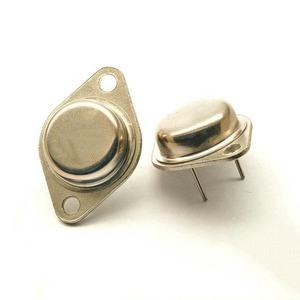
(OPT101 Light Analog Light Intensity Sensor Module Single Chip Photoelectric Diode 14KHz CJMCU-101)
Applications of OPT101 Light Analog Light Intensity Sensor Module Single Chip Photoelectric Diode 14KHz CJMCU-101
The OPT101 Light Analog Light Intensity Sensor Module is a single-chip solution combining a photodiode and a transimpedance amplifier. It converts light intensity into a voltage output. This makes it simple to measure light levels without complex circuits. The module works in a wide range of applications. It is reliable for both industrial and consumer projects.
The sensor operates up to 14kHz. This high bandwidth suits fast-changing light detection. It is ideal for environments needing quick response times. Examples include industrial automation systems. Machines use it to detect objects or monitor light changes in real time.
In consumer electronics, the module adjusts screen brightness. Devices like smartphones or tablets save power this way. It also improves user comfort. The sensor ensures displays adapt smoothly to ambient light.
Medical devices benefit from its accuracy. Pulse oximeters rely on precise light measurement. The OPT101 provides stable readings. It helps track blood oxygen levels effectively.
Environmental monitoring systems use the sensor to track light pollution. Researchers gather data on outdoor lighting conditions. The module’s linear output simplifies data analysis. It requires minimal calibration.
Hobbyists integrate the CJMCU-101 module into DIY projects. It pairs easily with microcontrollers like Arduino or Raspberry Pi. Users build light-activated alarms or smart garden systems. The voltage output connects directly to analog pins. Coding becomes straightforward.
The compact design saves space in tight layouts. Low power consumption extends battery life in portable devices. The sensor performs consistently across temperatures. It handles -40°C to 85°C.
The OPT101 is cost-effective for mass production. Its single-chip design reduces component count. Manufacturers cut costs without sacrificing performance.
This module suits robotics for obstacle detection. Robots navigate by sensing changes in reflected light. The high sensitivity detects even weak light sources.
Educational labs use it to teach photonics principles. Students learn light measurement techniques hands-on. The simplicity of the module aids understanding.
The CJMCU-101 version includes easy-to-solder pins. Prototyping requires no specialized tools. Developers test ideas quickly.
The sensor’s voltage range is 0V to Vcc. It interfaces with most analog systems. Users avoid signal conditioning circuits. This speeds up project timelines.
Reliability makes the OPT101 a standard in light sensing. It delivers repeatable results over long periods. Zosowa zosamalira ndizochepa.
Its versatility spans from basic light detection to advanced analytical tasks. The module adapts to diverse requirements. Users customize applications without redesigning hardware.
The OPT101 suits scenarios demanding precision and speed. It bridges the gap between analog sensing and digital processing. Integration into existing systems is seamless.
Mbiri Yakampani
Malingaliro a kampani PDDN Photoelectron Technology Co., Ltd., Ltd.(sales@pddn.com) ndi imodzi mwamabizinesi otsogola muukadaulo wamagetsi amagetsi ndi zinthu zamagetsi, zomwe zimakhudzidwa kwambiri pakupanga ma inverters a dzuwa, thiransifoma, magetsi owongolera, makabati ogawa, thyristors, ma modules, diodes, zotenthetsera, ndi zipangizo zina zamagetsi kapena semiconductors. Tidzadzipereka kupereka ogwiritsa ntchito apamwamba kwambiri, mankhwala ogwira ntchito ndi utumiki woganizira.
Imavomereza kulipira kudzera pa Kirediti kadi, T/T, West Union, ndi Paypal. PDDN idzatumiza katunduyo kwa makasitomala akunja kudzera pa FedEx, DHL, panyanja, kapena ndi mpweya. If you want high-quality OPT101 Light Analog Light Intensity Sensor Module Single Chip Photoelectric Diode 14KHz CJMCU-101, chonde titumizireni mafunso; tikhala pano kuti tikuthandizeni.
Njira Zolipirira
L/C, T/T, Western Union, Paypal, Credit Card etc.
Kutumiza
Panyanja, ndi mpweya, pa express, monga amapempha makasitomala.
Zosungirako
1) Kusunga mu malo youma firiji.
2) Pewani chinyezi komanso kutentha kwambiri.
3) Gwiritsani ntchito mwamsanga mutatsegula thumba lamkati.
5 FAQs of OPT101 Light Analog Light Intensity Sensor Module Single Chip Photoelectric Diode 14KHz CJMCU-101
The OPT101 Light Analog Light Intensity Sensor Module detects light levels using a built-in photodiode. It converts light to an electrical signal for easy reading. The CJMCU-101 version includes a single-chip design for simplified integration. Below are answers to common questions.
What does the OPT101 module do? It measures light intensity. The photodiode inside reacts to light. This generates a current. The chip converts the current to a voltage signal. The output voltage rises with brighter light.
How is the module connected? It works with analog input systems. Connect V+ to a 2.7V to 36V power supply. Ground the GND pin. The output pin links to an analog-to-digital converter or microcontroller. No extra components are needed.
What is the output voltage range? The output ranges from 0V to 5V. Darkness gives near 0V. Bright light pushes the voltage toward 5V. The response is linear. This makes calibration straightforward.
What does the 14kHz bandwidth mean? The sensor responds quickly to light changes. It detects fluctuations up to 14,000 times per second. This suits applications needing fast feedback. Examples include industrial automation or flicker detection.
Where is this sensor used? It works in light meters, medical devices, or robotics. It monitors ambient light in displays. It detects object presence in assembly lines. The small size fits portable gadgets.
The module operates in temperatures from -40°C to 85°C. It handles low-light and high-light conditions. Minimal power consumption makes it ideal for battery-powered projects. Compatibility with common microcontrollers simplifies prototyping.
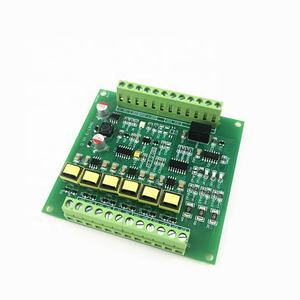
(OPT101 Light Analog Light Intensity Sensor Module Single Chip Photoelectric Diode 14KHz CJMCU-101)
PEMBANI MFUNDO
ZOKHUDZANA NAZO
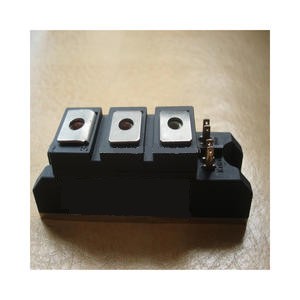
Mphamvu ya Thyristor Diode Module PK55 PK55F SANREX gawo la Thyristor
50mW Visible Laser Diode module TOSA pigtail
5SEG 0540T1820 Hitachi Energy ABB Silicon Wafer Diode and Thyristor Modules Original 60-Pak Semiconductor Product
Red Dot Focus Yosinthika 650nm 1mW 5mW Industrial Laser Diode Module 3-5V yokhala ndi Driver Board
SPTECH RHRP15120 Rectifier Diode 1200V 15A TO-220-2 RHRP15120 Fast Recovery Diode Inverter Diode yapadera