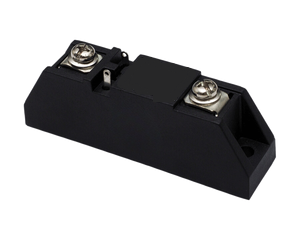
Thyristors en ligne | Semi-conducteurs de puissance de haute qualité

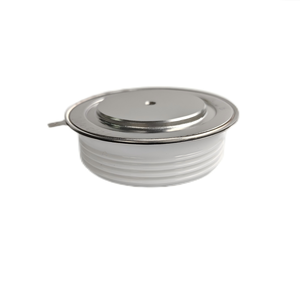
PARAMÈTRES DU PRODUIT
Description
Aperçu deModules à thyristors
Les modules à thyristors sont des composants clés de la technologie de l'électronique de puissance. Ils sont constitués d'un ou plusieurs thyristors encapsulés dans un boîtier compact. Les thyristors sont à quatre couches, dispositifs semi-conducteurs à trois bornes principalement utilisés dans les applications qui contrôlent et régulent le courant alternatif ou continu de haute puissance. Ils peuvent rapidement passer d'un état de haute impédance à un état de conduction à faible impédance en fonction d'un signal de déclenchement., obtenant ainsi un contrôle précis du courant.
Caractéristiques et avantages deModules à thyristors
Capacité de gestion de puissance élevée: Les modules à thyristors peuvent supporter des tensions et des courants extrêmement élevés, ce qui les rend adaptés aux systèmes de conversion de puissance et de contrôle de qualité industrielle.
Temps de réponse rapide: Des temps de commutation très courts et de faibles pertes garantissent un fonctionnement à haut rendement.
Fiabilité et durabilité: Conception robuste, fonctionnement stable dans des environnements difficiles, et longue vie.
Intégration facile: La conception modulaire simplifie l'installation et réduit les besoins de maintenance.
Protection contre les surcharges: Les mécanismes de protection intégrés tels que la protection contre la surchauffe et la surintensité améliorent la sécurité du système.
Applications polyvalentes: Largement utilisé dans une variété d'applications nécessitant un contrôle précis du courant.
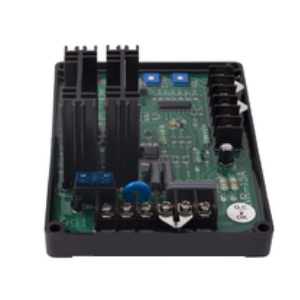
(Thyristor module for thyristor welding machine AC DC power module Diode module)
Specification of Thyristor module for thyristor welding machine AC DC power module Diode module
Thyristors are an essential component in AC DC power modules and diode modules, ensuring safe and efficient operation of the equipment. These devices have become increasingly important in industrial settings as they provide stable and reliable power supplies that meet various industry standards.
In AC DC power modules, thyristors are used to regulate the current output and protect against overcurrent or short circuits. They are typically made from a variety of materials such as silicon carbide, titanium, et aluminium, with different specifications based on their performance requirements.
One of the key features of thyristors is their ability to switch quickly and efficiently, making them ideal for use in high-speed applications where speed is critical. They also have a low internal resistance, which allows them to operate at higher voltages without overheating or damage.
In diode modules, thyristors are used to control the flow of electricity between two electrodes. They are often used in reverse voltage (VCE) circuits, where the voltage across the diode acts as a protective mechanism against overvoltage or short circuiting.
The specific specification of a thyristor module will depend on its intended application and usage conditions. It may include factors such as the thyristor’s rating, thermal stability, and electrical characteristics like its forward voltage gain, reverse saturation voltage, and ideality factor.
It is important to choose a thyristor module that meets the specific needs of your application and complies with relevant safety and performance standards. This may involve choosing the appropriate thyristor material, specifying the appropriate rated voltage and current, and testing the module to ensure it functions properly under varying operating conditions.
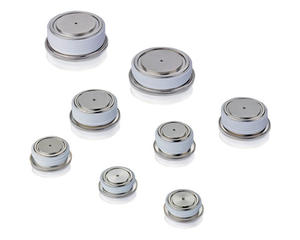
(Thyristor module for thyristor welding machine AC DC power module Diode module)
Applications of Thyristor module for thyristor welding machine AC DC power module Diode module
Thyristors are electronic components that control the flow of current in an electrical circuit. They are widely used in various applications, including thyristor welding machines and AC DC power modules.
In thyristor welding machines, thyristors are used to switch the flow of electricity to either positive or negative depending on whether a wire is being or not. The thyristor’s voltage rating determines its ability to withstand high temperatures, which makes it suitable for use in harsh industrial environments where precise temperature control is critical. En plus, thyristors can be used as a starting point for electrical circuits, making them versatile for a wide range of applications.
On the other hand, AC DC power modules are electrical devices that convert alternating current (CA) en courant continu (CC). They are commonly used in various applications such as electronic equipment, data centers, et systèmes d'automatisation industrielle. The quality and efficiency of an AC DC power module depend on several factors, including the type of power supply, the components used, and the application requirements.
One of the most significant advantages of using thyristor modules in AC DC power modules is their ability to efficiently store and regulate energy. Unlike traditional power supplies that require additional components, thyristor-based power modules have built-in energy storage capabilities that allow them to maintain a consistent output even when there is a lack of input power. This feature makes them ideal for use in power grids that operate continuously, such as in renewable energy sources.
Another advantage of thyristor-based power modules is their ability to increase system efficiency. By regulating the flow of electricity, thyristors can reduce energy waste and improve overall system performance. Par exemple, thyristors can be used to boost the power output of a motor during periods of low demand, reducing the need for additional power generation sources.
En conclusion, thyristors are essential components of both thyristor welding machines and AC DC power modules. Their versatility and efficiency make them indispensable in many industries, and the introduction of thyristor-based power modules has significantly improved the performance of these devices. As technology continues to advance, we can expect to see even more innovative applications of thyristors in the future.
Profil de l'entreprise
Luoyang Datang Energy Tech Co.Ltd(sales@pddn.com) est l'une des principales entreprises dans le domaine de la technologie électronique de puissance et des produits électriques, qui est pleinement impliqué dans le développement des onduleurs solaires, transformateurs, régulateurs de tension, armoires de distribution, thyristors, modules, diodes, radiateurs, et autres appareils électroniques ou semi-conducteurs. Nous nous engagerons à fournir aux utilisateurs des produits de haute qualité, produits efficaces et service attentionné.
Il accepte les paiements par carte de crédit, T/T, Union occidentale, et Paypal. PDDN expédiera les marchandises aux clients à l'étranger via FedEx, DHL, par la mer, ou par avion. If you want high-quality Thyristor module for thyristor welding machine AC DC power module Diode module, veuillez nous envoyer des demandes; nous serons là pour vous aider.
Méthodes de paiement
L/C, T/T, Western union, Paypal, Carte de crédit, etc..
Expédition
Par la mer, par avion, par express, comme le demandent les clients.
Conditions de stockage
1) Conserver dans un environnement sec à température ambiante.
2) Évitez l'humidité et les températures élevées.
3) Utiliser immédiatement après avoir ouvert le sac d'emballage intérieur.
5 FAQs of Thyristor module for thyristor welding machine AC DC power module Diode module
1. What is a thyristor module?
A thyristor module is a circuit component that converts alternating current (CA) en courant continu (CC). It consists of two thyristors connected in a voltage-controlled manner, which allows the module to regulate the flow of electricity.
2. How do thyristor modules work?
Thyristor modules use electronic components such as diodes and transistors to control the flow of electricity. When one thyristor is turned on or off, it controls the flow of electricity through the other thyristor. This ensures that the AC input is converted into DC output without loss of energy.
3. What types of thyristor modules are available?
There are several types of thyristor modules available for thyristor welding machines, including analog modules, digital modules, and hybrid modules. Analog modules use basic diode characteristics to control the flow of electricity, while digital modules use more advanced electronics to control the thyristors. Hybrid modules combine both analog and digital technologies to provide even greater control over the thyristor flow.
4. What is the difference between a thyristor module and a diode module?
The main difference between a thyristor module and a diode module is their role in converting AC into DC. A thyristor module is responsible for controlling the flow of electricity, while a diode module is responsible for protecting the electronic components from damage caused by surges in voltage.
5. How much does a thyristor module cost?
The cost of a thyristor module depends on several factors, including the type of thyristor module used, the quality of the electronic components used, and any additional features required for the particular application. Cependant, in general, thyristor modules can be relatively inexpensive compared to other electronic components used in thyristor machines.
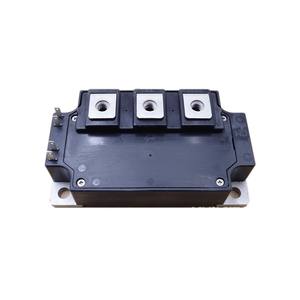
(Thyristor module for thyristor welding machine AC DC power module Diode module)
DEMANDER UN DEVIS
PRODUITS CONNEXES
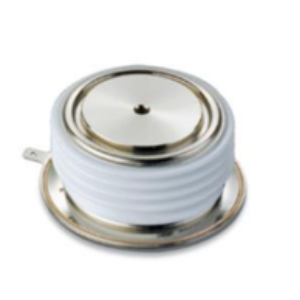
electronics component IGBT MODULE Diode Thyristor SCR transistors mosfet IC chips BSM75GB120DN2
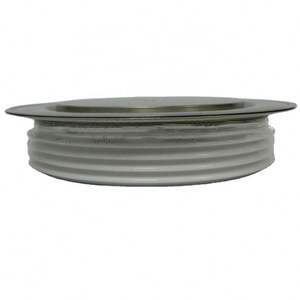
MTC40-16-215F3 TECHSEM Thyristor Module Diode Rectifier Power Module Ready Stocks 100% Genuine Quality Whole MTC40-16
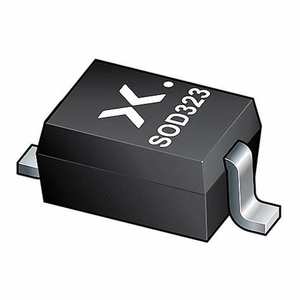
STOCK nouveau et ORIGINAL module de Diode MODULE de puissance IGBT Thyristor SCR MODULE IGBT SKKD46/04 SKKD 46/04
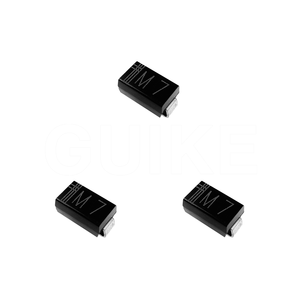
Module de thyristor à diode pont d'origine PWB200A40
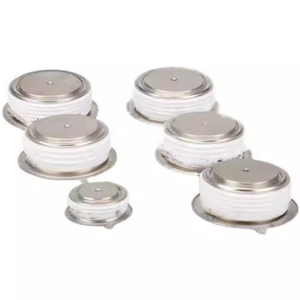
5SEG 0540T1820 Hitachi Energy ABB Silicon Wafer Diode and Thyristor Modules Original 60-Pak Semiconductor Product