Thyristors Online | High-Quality Power Semiconductors

Power at Your Fingertips: The Magic of Fully Controlled Thyristor Rectifiers
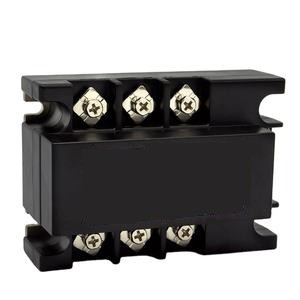
(What Is Fully Controlled Thyristor Rectifier)
Ever wonder how factories smoothly control massive motors? Or how electric trains accelerate so powerfully? A key player behind the scenes is the Fully Controlled Thyristor Rectifier. It might sound complex. But it’s a brilliant piece of engineering. It gives precise control over electrical power. Let’s explore how it works and why it matters.
1. What Exactly is a Fully Controlled Thyristor Rectifier?
Think of electricity flowing like water. AC power constantly changes direction. Like a tide going in and out. Many machines need steady DC power. Like a river flowing one way. A rectifier changes AC to DC. It’s like a one-way valve for electricity.
A Fully Controlled Thyristor Rectifier uses special switches called thyristors. These are like super-fast gates. They only let current flow when told. The “Fully Controlled” part is important. It means every thyristor in the circuit can be switched on and off by a control signal. This gives engineers total command. They decide exactly when power flows. This is different from simpler rectifiers. Those only turn on automatically. They offer less control.
The main parts are thyristors. They are arranged in a bridge pattern. There’s also a control circuit. This sends precise timing signals. It tells each thyristor exactly when to conduct. This setup changes AC into DC. But it also lets you adjust the amount of DC power. You control the output voltage and current. This happens by changing the timing of the control signals.
2. Why Use a Fully Controlled Thyristor Rectifier? The Big Advantages
Why choose this type? It gives significant benefits over other rectifiers. Especially where precise power control is needed.
First, it offers excellent control. You can adjust the output DC voltage smoothly. From almost zero up to the maximum possible. This is vital for applications like motor speed control. Need the motor to run slower? Just reduce the rectifier’s output voltage. Want it faster? Increase the voltage. It’s that direct.
Second, it allows power to flow in both directions. Sounds strange for a rectifier? It’s true. In specific setups, it can act like an inverter. It can feed power back into the AC supply. This is crucial for regenerative braking. Think of electric cranes or trains. When they slow down, their motors generate power. The fully controlled rectifier can capture this power. It sends it back to the grid. This saves energy. It also provides smooth braking force.
Third, it handles large amounts of power efficiently. Thyristors are robust. They manage high currents and voltages well. Losses are relatively low. This makes them cost-effective for heavy industrial jobs.
3. How Does It Actually Work? The Timing Trick
The secret lies in controlling the firing angle. This is the key concept. Imagine the AC voltage waveform. It’s a sine wave. It rises, peaks, falls, goes negative, and repeats.
A thyristor blocks current until it gets a small pulse on its gate terminal. This pulse is the “turn-on” command. The “firing angle” (often called alpha, α) tells us when during the AC cycle this pulse happens. It’s measured in degrees from the point where the voltage starts rising from zero.
Here’s the trick:
Fire the thyristor early (small α)? It conducts for a large part of the cycle. More power gets through to the DC side. Output voltage is high.
Fire the thyristor late (large α)? It conducts for only a small part of the cycle. Less power gets through. Output voltage is low.
The control circuit watches the AC voltage. It calculates the exact moment to fire each thyristor. Based on the desired output. This precise timing happens continuously. Hundreds of times per second. The result is smooth, adjustable DC power. The thyristor turns off naturally. This happens when the AC current flowing through it tries to reverse direction. At the next zero crossing point. The control circuit then fires the next thyristor in the sequence. At the right time.
4. Where Do We See Them? Key Applications
Fully Controlled Thyristor Rectifiers are workhorses. They power countless industrial processes. Here are some major uses:
Variable Speed DC Motor Drives: This is a classic application. Controlling the DC voltage to the motor armature directly controls its speed. Fully controlled rectifiers provide this smooth, wide-range voltage control. Found in steel mills, paper machines, cranes, and locomotives.
High Voltage DC (HVDC) Transmission: Moving massive power over long distances? HVDC is often best. Huge fully controlled thyristor rectifiers convert AC to DC at one end. At the other end, they convert DC back to AC. This setup minimizes power losses over hundreds of miles.
Battery Charging Systems: For large industrial batteries. Like those in forklifts or backup power systems. Precise control of charging voltage and current is essential. These rectifiers deliver it. Preventing overcharging and extending battery life.
Electrolysis Processes: Producing aluminum or chlorine gas? These need huge, stable DC currents. Fully controlled rectifiers provide the precise DC power needed. They are crucial in chemical plants and smelters.
DC Power Supplies for Industrial Equipment: Many machines need stable, adjustable DC power. For plating, welding, or magnet power supplies. These rectifiers offer the reliability and control required.
Regenerative Braking Systems: As mentioned earlier. In electric vehicles, trams, and elevators. They capture braking energy. Feeding it back to the supply. Saving power and improving braking performance.
5. Clearing Up Common Questions: FAQs
Let’s tackle some frequent queries:
Can it really control voltage down to zero? Yes. By setting the firing angle very late (close to 180 degrees). The thyristor conducts for an extremely short time. Output voltage becomes very small. Practically zero for control purposes.
How does it handle AC power flowing back? It needs a specific setup. Usually connected to an AC source that can absorb power. Like the grid. The control circuit adjusts the firing angle beyond 90 degrees. This makes the DC voltage negative relative to the current flow direction. Power then flows from the DC side back to the AC side.
What about harmonics? A big problem? Yes. This is a downside. Turning thyristors on mid-cycle chops the AC waveform. This creates harmonic currents. These are multiples of the supply frequency. They can distort the AC voltage. Harmonics must be managed. Using filters or special transformer connections. Like 12-pulse or 24-pulse configurations.
Is it noisy? The switching itself is silent. But harmonics can cause transformers and motors to hum. Good design minimizes this.
Does it need cooling? Absolutely. Handling high power generates heat. Thyristors are mounted on heatsinks. Often cooled by air fans or water. Proper cooling is vital for reliability and long life.
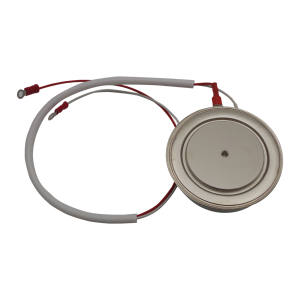
(What Is Fully Controlled Thyristor Rectifier)
How reliable are thyristors? Very reliable. They are solid-state devices. No moving parts. They last a long time with proper cooling and protection. Surge protection is important. To guard against voltage spikes on the AC line.