Thyristors Online | High-Quality Power Semiconductors

Unlocking the Power of Thyristors: Your Guide to the Electronic Switchmaster
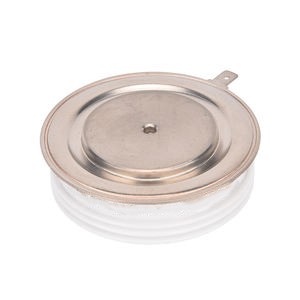
(What Is A Thyristors)
Ever wonder how massive industrial machines start smoothly or your dimmer light switch works its magic? The answer often lies hidden in a small, powerful component called a thyristor. These unsung heroes of the electronics world control massive amounts of power with surprising precision. Let’s dive in and discover what makes them tick.
1. What Exactly is a Thyristor?
Think of a thyristor as a super-reliable electronic switch. Unlike a regular switch you flip with your finger, a thyristor switches on electronically. Once triggered by a small control signal, it latches firmly into the “ON” state. It stays conducting electricity until the current flowing through it drops to zero. This latching behavior is its defining feature. Structurally, it’s a solid-state device made from semiconductor materials, typically silicon. It has three terminals: Anode, Cathode, and a Gate. The gate is the control point – apply a small pulse here, and you command the thyristor to turn on, allowing current to flow from anode to cathode. Essentially, it acts like a one-way street for power, controlled by that gate signal.
2. Why Do We Use Thyristors?
Thyristors solve specific problems brilliantly. Their main strength is handling very high power levels. They can switch thousands of volts and hundreds or even thousands of amperes. This makes them perfect for heavy-duty jobs. Their latching action is another key benefit. Once on, they stay on without needing a continuous control signal. This simplifies control circuits. They are also incredibly robust and reliable. With no moving parts, they last a long time under tough conditions. Compared to mechanical switches or relays, thyristors switch much faster without sparking or wearing out. They offer precise control over AC power. By controlling exactly when during the AC cycle they turn on, you can regulate the amount of power delivered to a load, like a motor or a heater. This is called phase control and is incredibly useful.
3. How Does a Thyristor Actually Work?
Imagine a thyristor as having four layers of semiconductor material sandwiched together, forming a PNPN structure. Think of it like two interconnected transistors. Applying a small positive voltage pulse to the gate terminal relative to the cathode injects charge carriers. This triggers the internal regenerative action. Once this action starts, the two “transistors” inside effectively turn each other on and keep each other conducting. The device latches on. Now, current flows freely from the anode to the cathode. The gate loses control at this point. The thyristor will stay conducting as long as the anode current stays above a minimum level called the holding current. To turn it off, the anode current must be interrupted or brought below this holding current. In AC circuits, this happens naturally every half-cycle when the voltage crosses zero. In DC circuits, you need a special circuit to force the current down to zero.
4. Thyristor Applications: Where Do They Shine?
Thyristors are workhorses in power electronics. You find them everywhere high power needs controlling efficiently. Here are some key spots:
Light Dimmers & Heater Controls: That knob controlling your room brightness or stove heat? It likely uses a thyristor to chop the AC waveform, delivering only part of the power to the lamp or heating element.
Motor Speed Controllers: From huge industrial conveyor belts to power tools, thyristors regulate the power fed to motors, controlling their speed smoothly.
Battery Chargers: They manage the rectification (converting AC to DC) and regulate the charging current for batteries in cars, UPS systems, and more.
Uninterruptible Power Supplies (UPS): Thyristors act as fast switches in the static transfer switch, instantly shifting the load to battery power during a mains failure.
High-Voltage Direct Current (HVDC) Transmission: This technology for moving massive amounts of power over long distances relies heavily on massive banks of thyristors for conversion and control.
Over-Voltage Protection (Crowbars): They can be used to short-circuit a power supply if voltage gets too high, protecting sensitive equipment downstream.
Power Supplies: Used in rectification and regulation stages for industrial power sources.
5. Thyristor FAQs: Your Quick Questions Answered
Can a thyristor turn itself off? Generally, no. Once triggered on, it stays on until the current drops to zero. You need the circuit to interrupt the current for it to turn off.
What’s the difference between a thyristor and a transistor? Transistors can amplify signals and switch proportionally. Thyristors are primarily powerful on/off switches that latch. Transistors need continuous control to stay on; thyristors latch on with a pulse.
Are SCR and thyristor the same thing? Mostly yes. SCR (Silicon Controlled Rectifier) is the most common and basic type of thyristor. “Thyristor” is the broader family name, including SCRs and other variants like Triacs.
What is a Triac? A Triac is a special type of thyristor. It can conduct current in both directions, making it ideal for controlling AC power fully (like in a light dimmer) with a single device.
Why do they sometimes need heatsinks? Because thyristors handle high power, they generate heat due to the voltage drop across them when conducting. Heatsinks dissipate this heat to prevent overheating and failure.
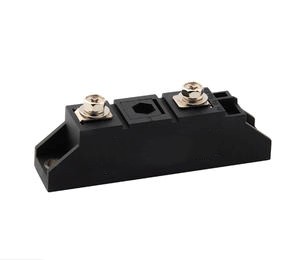
(What Is A Thyristors)
Are thyristors still relevant with modern transistors? Absolutely! For very high power, high voltage applications requiring robustness and simplicity, thyristors (especially SCRs) remain the go-to solution. They complement high-power transistors like IGBTs.