Thyristors Online | High-Quality Power Semiconductors

Thyristor vs. Triac: The Power Electronics Face-Off
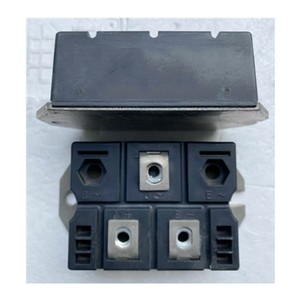
(What Is Difference Between Thyristor And Triac?)
Ever peeked inside a big power supply or a fancy light dimmer? You might spot some small components doing big jobs. These are thyristors and triacs. They both control large amounts of electricity. They act like powerful switches for high voltage and current. But they aren’t the same. Knowing their differences matters. It helps you pick the right part for the job. Let’s settle the score: Thyristor vs. Triac.
1. What Are Thyristors and Triacs?
Both thyristors and triacs belong to a component family. This family is called silicon-controlled rectifiers (SCRs). They are solid-state switches. They manage electrical power flow. They do this without moving parts. Think of them as electronic gates for electricity. They let power pass only when you give them a specific signal.
A thyristor is like a one-way street for electricity. It has three layers of semiconductor material. It has three main terminals: Anode, Cathode, and Gate. The thyristor conducts current only from its anode to its cathode. It blocks current in the reverse direction. Once triggered by a small gate current, it stays on. It conducts until the current drops almost to zero. This makes it perfect for controlling direct current (DC).
A triac is different. Think of it as a two-way street. Its name stands for TRIode for AC. It’s essentially two thyristors joined together. They are connected in inverse parallel. A triac has three terminals too: Main Terminal 1 (MT1), Main Terminal 2 (MT2), and Gate. The clever part is this. A triac can conduct current in both directions. It can switch alternating current (AC) on or off. One gate signal can control power flow in either direction. This is key for AC applications.
2. Why Choose One Over the Other? Key Differences Explained
The main difference is simple. It’s about current direction control. Thyristors are unidirectional. Triacs are bidirectional. This single fact decides where you use each device.
Thyristors excel in DC circuits. They handle high voltage and current in one direction well. They are robust. They are reliable for things like battery chargers, DC motor speed controllers, and power supplies. Because they only conduct one way, they are often used in pairs for AC control. This setup needs more components. It is less efficient than using a single triac.
Triacs shine in AC circuits. Their ability to conduct in both directions is a huge advantage. It allows control of AC power with just one component. This makes circuits simpler and cheaper. Light dimmers, motor speed controls for AC motors, and heating element controllers often use triacs. They are convenient. But they have limitations. Triacs can be more sensitive to electrical noise. They might turn on accidentally. They also switch slightly slower than thyristors in some cases.
3. How Do They Work? The Triggering Mechanism
Both devices need a small signal to turn on. This signal goes to their gate terminal. They stay on until the main current stops. But how they get triggered differs slightly.
For a thyristor, you apply a positive voltage. You apply it between the gate and the cathode. This injects a small current into the gate. It turns the thyristor on. It starts conducting from anode to cathode. It keeps conducting. It stops only when the anode current falls below a certain level. This level is called the holding current. Removing the gate signal doesn’t turn it off. The main current must stop.
A triac also needs a gate signal to turn on. But because it handles AC, the gate trigger works differently. You can trigger a triac in four different ways. The voltage across MT1 and MT2 can be positive or negative. The gate voltage relative to MT1 can also be positive or negative. This flexibility is good. But it means the gate circuit design needs more care. It ensures reliable triggering under all conditions. Once triggered, the triac conducts for the rest of that AC half-cycle. It turns off when the current naturally crosses zero.
4. Where Are They Used? Real-World Applications
Thyristors and triacs are everywhere. They control power efficiently. They are found in homes and industries.
Thyristors are the go-to for DC power control. You find them in:
DC motor drives for industrial machines.
Uninterruptible Power Supplies (UPS) for battery backup systems.
High-voltage DC power transmission lines.
Welding equipment controls.
Battery charging systems for cars and solar setups.
Triacs dominate the AC control world. They are ideal for:
Household light dimmers. They smoothly adjust lamp brightness.
Speed controls for small AC motors in fans and power tools.
Electric heater controls regulating temperature.
Solid-state relays switching AC loads electronically.
Soft starters for motors reducing inrush current.
Choosing between them depends on the job. Need to control DC or very high power reliably? Pick a thyristor. Need a simple, cost-effective solution for AC power below medium power levels? A triac is often best.
5. Thyristor and Triac FAQs
Can I use a triac instead of a thyristor?
Sometimes, but not always. If your circuit uses DC power, a triac won’t work properly. It conducts in both directions. For AC circuits, you often can use a triac. It replaces two thyristors wired back-to-back. This simplifies the design. Check the power levels and switching needs first.
Which one is cheaper?
Generally, triacs are cheaper for low to medium power AC applications. They need fewer supporting parts. High-power thyristors can be expensive. But they handle tough jobs better.
Do they get hot?
Yes, both generate heat when conducting current. They need proper heatsinks. Without cooling, they can overheat and fail. The heat comes from the voltage drop across the device when it’s on.
Why does my triac-based dimmer sometimes turn on by itself?
This is called false triggering. It can happen with triacs. Electrical noise or sudden voltage spikes on the mains can trigger the gate unintentionally. Using a snubber circuit (a resistor and capacitor) across the triac usually fixes this.
Are they still used today?
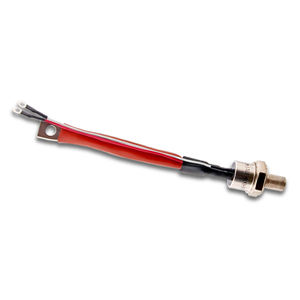
(What Is Difference Between Thyristor And Triac?)
Absolutely! While newer devices like IGBTs and MOSFETs handle very high power and high frequencies better, thyristors and triacs are still widely used. They are simple, rugged, and cost-effective for many power control tasks. They are especially common in consumer appliances and industrial controls.